
Day trading in a TFSA: the CRA business-income risk
The TFSA is tax-free for normal investment growth. That does not mean it is a tax-free trading business. This is the line that matters, and it is the line that makes day trading in a TFSA risky.
The problem is not that a TFSA can never hold stocks. CRA's own TFSA page says permitted investments generally include cash, mutual funds, securities listed on a designated stock exchange, GICs, bonds, and certain small-business shares. The issue is activity. If the TFSA trust is found to be carrying on a business of trading securities, the income from that business can be taxable.
What's in this guide
| Section | What it covers |
|---|---|
| The rule | Tax-free investing versus taxable business income |
| CRA factors | The warning signs that trading looks like a business |
| Examples | What low, medium, and high-risk activity can look like |
| Records | What to keep if you are active |
| Sources | Official starting points |
The rule in plain language
A TFSA is meant to shelter investment income, not to turn a trading operation into tax-free income. A person can buy and sell investments in a TFSA. But if the pattern of activity looks like a business, CRA can treat the TFSA trust as having earned business income.
That distinction matters because business income is different from ordinary investment growth. If CRA assesses the TFSA trust on business income, the expected "tax-free" result can disappear.
The factors CRA and courts tend to care about
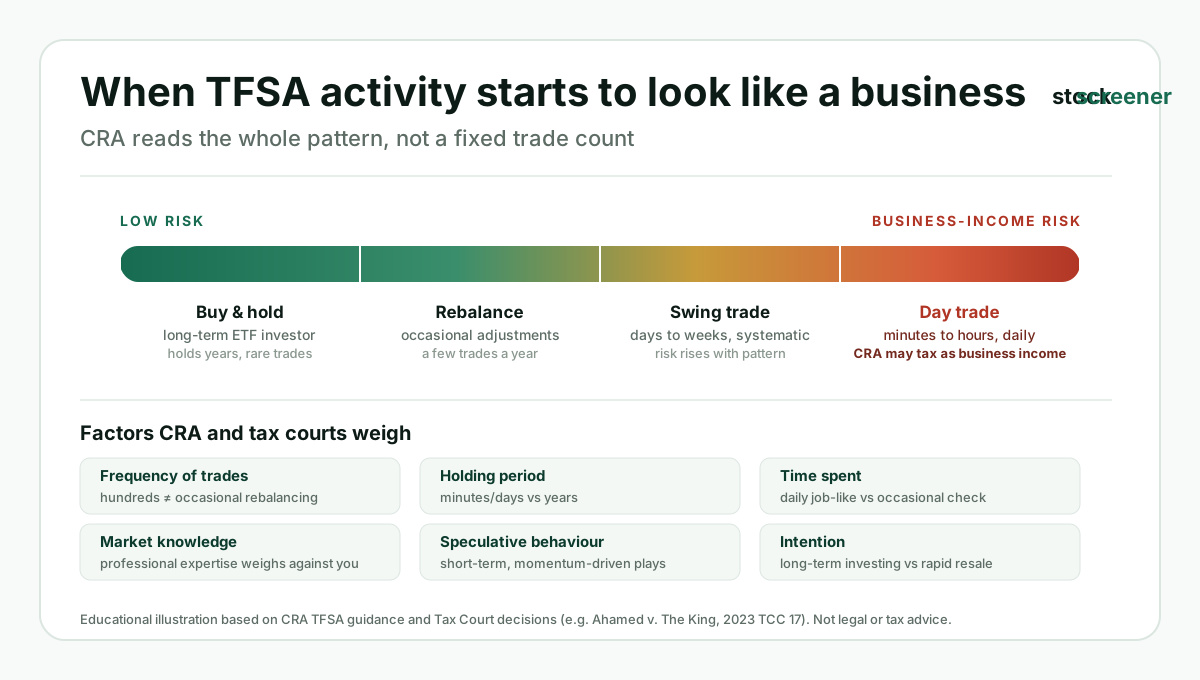
There is no official public rule that says "more than X trades per year is day trading." That would be tidy, but tax law is rarely that kind. The analysis is fact-specific. Common factors include:
- Frequency of trades: hundreds of trades looks different from occasional rebalancing.
- Holding period: positions held for minutes or days look more trading-like than positions held for years.
- Time spent: treating the account like a daily job is different from checking a portfolio occasionally.
- Knowledge and experience: professional market knowledge can weigh against the taxpayer.
- Speculative behavior: short-term, momentum-driven, or highly speculative patterns can matter.
- Financing and tools: sophisticated systems, leverage outside the account, or commercial process can add risk.
- Intention: buying for long-term investment is not the same as buying inventory for rapid resale.
None of these factors decides the case alone. A retiree who rebalances a few ETFs is not in the same conversation as someone scanning penny stocks all day and flipping positions repeatedly.
Low, medium, and high-risk examples
| Pattern | Why it reads that way |
|---|---|
| Long-term ETF investor | Buys diversified funds, rebalances occasionally, holds positions for years. Usually reads like investing. |
| Active swing trader | Trades often, holds positions for days or weeks, follows technical setups. Risk rises as the pattern becomes systematic. |
| Daily short-term trader | Many trades, short holding periods, heavy time commitment, strong market expertise. This is where business-income risk becomes serious. |
The uncomfortable truth: people often ask this question only after the account has grown. That is backwards. If the strategy depends on tax-free treatment, the tax risk is part of the strategy.
If you are active, keep records
Good records do not guarantee the outcome, but bad records make every conversation worse. Keep trade confirmations, strategy notes, time spent, funding history, and why the activity is investment-like if that is your position. If you are genuinely day trading, a tax professional should be part of the setup before CRA is part of the story.
Use the TFSA for the right lesson
The screener is built around account-location education, not trading calls. Search a stock and read the TFSA, RRSP, and taxable-account notes before treating the account as interchangeable.
Open the free stock screenerRelated reading
- Unused TFSA and RRSP contribution room
- Canadian stock account location: TFSA vs RRSP vs taxable
- Wealthsimple prediction markets and the registered-account catch
- TFSA transfer in kind: tax and contribution room
Frequently asked questions
Is day trading allowed in a TFSA?
A TFSA can hold many listed securities, but if the activity amounts to carrying on a business of trading, CRA can tax the TFSA trust's business income. The analysis is fact-specific.
How does CRA decide if TFSA trading is a business?
Factors can include trade frequency, holding period, knowledge, time spent, financing, and whether the activity looks commercial rather than investment-like.
Can CRA tax gains inside a TFSA?
The TFSA is generally tax-free for investment income, but business income carried on by a TFSA trust can be taxable. That is the risk active traders worry about.